|
Books & Free Online Pattern Making Classes
by Don McCunn
It is important to understand that there are two basic approaches to designing patterns. One approach is used by the fashion industry. It uses standardized measurement charts to create patterns that will fit as many people as possible for ready-to-wear (RTW) clothes. The approach described in the books and classes here show how to design patterns for one specific body with custom-fit Bespoke patterns.
In the past I have been asked by people how to create RTW patterns. A topic I have avoided. But in Fashion & Costume Design in Quarter Scale I have included information I hope these designers will find helpful such as discussing the DNA of body shapes to achieve a more "generic" fit, introduces a new approach the design that eliminates the need for an in-person fitting, shows how to prototype design ideas in quarter or half scale, etc. I have also included a section in my CAPD classes RTW for Independent Designers.
Many people find it easier to understand a process if they can see it demonstrated rather than read about it in a book. These free classes offer that type of demonstration for designing patterns in over 600 short, topic focused videos.
For these seven classes the first three shown in italics include demonstrations for the books shown above. The next three shown in quotation marks do not have a book. They include written instructions in free downloadable PDF files. The last class is for using a computer to create patterns. For these computer classes there are no instructions in print. The videos and instructions can be viewed in a split screen with half of the screen showing the videos and the other half of the screen used to create the patterns.
Contents
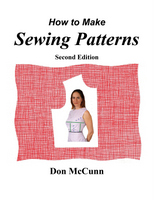
- How to Make Sewing Patterns
- How to Make Custom-Fit Bras & Lingerie
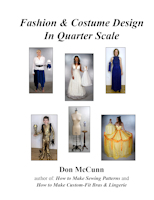
- Fashion & Costume Design in Quarter Scale
- "An Introduction to Pattern Design"
- "How to Make Custom-Fit Corsets"
- "Pattern Design Activities for Kids"
- Computer Aided Pattern Design
While video demonstrations can help people understand a design process, these books with illustrations contain information that spans a broader spectrum. They also include step-by-step instructions that can be used as a reminder of the process that needs to be followed.
The "text books" for these classes are available from your local library which can request them through interlibrary loan using the information in the Flyer for Libraries.
"I learned to sew at a young age, making mostly garments for myself and for friends. I decided to learn flat pattern drafting this year because I was tired of the many alterations I need to make to commercial and indie patterns in order to make them fit. I have watched every pattern drafting class on Craftsy, and purchased every book on pattern drafting and fitting there is. Your book, Don, was the only one that delivered the goods. There are books that teach garment fitting, and books mostly geared for the industry that teach drafting, but only yours contains enough information on both subjects to result in garments that fit."
How to Make a Lower Torso (aka Skirt) Sloper
This course covers the waist-to-hip region for both men and women. The resulting patterns can be used to optimize the fit of the torso portion of pants and it is an essential pattern for creating a Body Double. The course concludes with demonstrations of how to create a variety of different skirt designs.
How to Make a Pants Sloper
This course describes creating pants for both men and women. The pants pattern can be used to simplify the process of creating the leg portion of a Body Double.
How to Make an Upper Torso (aka Bodice) Sloper
This course covers the upper torso for both men and women. The resulting patterns are essential patterns for creating a Body Double.
The Sleeve Sloper and Variations
This course describes how to make a fitted sleeve pattern then shows a variety of variatlions in both woven and knit fabric.
How to Make a Body Double
Typically Dress forms are for fitting the torso. This course shows how to make a Body Double that includes the torso, legs, arms, and even adds a head. It includes instructions, such as how to make pipe stands, that are not described in How to Make Sewing Patterns.
Patternmaking Tools and Supplies
This is a list of the tools and supplies required to create the Master Patterns described in the classes above and How to Make Sewing Patterns.
How to Make Custom-Fit Bras
This course is about making underwire bras. The initial model for this bra was unable to wear an underwire bra for more than two hours at a time. With the first Bespoke bra I made for her, she wore it for a full week and forgot she had it on.
How to Make Bust Sling Bras and Variations
The Bust Sling Bra is designed specifically for women who need a supportive bra. The resulting patterns can be used to make a variety of garments that do not require a separate undergarment. Read More.
How to Make Swimsuits, Lingerie, & Empire Dresses
The patterns in this course include easy to make bras as well the tops and bottoms of swimsuits, fitted briefs, and empire style tops and dresses.
Fashion & Costume Design in Quarter Scale provides instructions and patterns for creating quarter-scale Mini-Mes to learn pattern making techniques and to prototype design ideas. This process can either be done by hand or by computer as described in Computer Aided Pattern Design, CAPD
How to Make a Mini-Me
This course describes how to make quarter-scale Mini-Me Dress Forms.
Scaling Patterns
This course describes how to scale patterns from full size to quarter scale and quarter scale to full size using paper and pencil.
Patterrn Design by Tracing Photos (A Work-in-Progress)
Fashion & Costume Design in Quarter Scale introduces a new approach to creating patterns using 6 quarter-scale photos and 7 measurements.
The videos in this course supplement the material in the free e-Book An Introduction to Pattern Design which is included with the videos. Creating fitted Master Patterns is the first step in the design process--you do it once. Creating designs from the Master Patterns is something that can be done a limitless number of times.
To eliminate fitting issues these classes use the interrnationally standard shape and size of a wine bottle. This is the body shape used in these classes to design apron patterns from the provided Master Pattern.
The instructions are designed for beginning as well as advanced sewers. For more information, see the Overview.
This course describes how to make three styles of custom-fit corsets: Underbust, Strapless, and Shoulder Strap. The text is provided as PDF files in the class.
With basic pattern design skills it is not how much you know but how you use what you do know. If you are new to pattern design and/or sewing, the classes in "Pattern Design Activities for Kids" shows how anyone over the age of 5 can learn to design patterns even before they know how to sew.
The first three weeks have pattern design projects that demonstrate all pattern design techniques. The final week includes instructions for the basic hand and machine sewing skills required to make garments. The fixed shape of a wine bottle is used including a pattern for cutting the shape out of cardboard. The text is provided as PDF files in the class.
|
Don Welcomes Questions At
|
For NSFW photographs by Don McCunn, visit
Revisiting the Classics
Don McCunn's Pattern Design Guide e-Books and
Patterns for Fashion Dolls have been discontinued.
Other Publications -- Current Publishers
Copyright © 2007, 2020, & 2024 by Donald H. McCunn |